
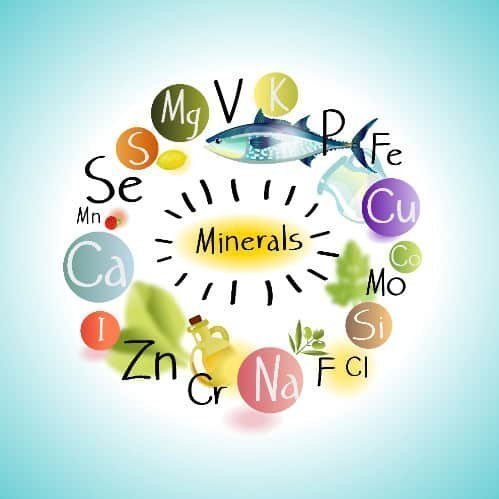
Minerals are the unsung heroes of the body, tiny but mighty players in countless biological processes. They’re involved in everything from energy production to nerve signalling, immune function, and maintaining bone strength. Yet, despite their importance, minerals often go unnoticed in our daily diet – and deficiencies are more common than you might think.
Calcium
Absorption & Excretion
Calcium is absorbed in the small intestine via active transport and passive diffusion. Active absorption relies on calcium-binding proteins and pumps, while passive absorption depends on concentration gradients. The kidneys are the primary route for calcium excretion, with minor losses via sweat and feces.
Homeostasis
Calcium levels are tightly hormone-regulated. Vitamin D boosts absorption, while parathyroid hormone helps maintain serum levels. Bones act as the main storage reservoir, releasing calcium when blood levels drop.
Therapeutic Applications
Calcium is a cornerstone for bone health, particularly in postmenopausal women. Supplementation alongside vitamin D, and sometimes vitamin K, can improve bone mineral density. Calcium is also relevant in premenstrual syndrome (PMS) management and has synergistic effects with magnesium and other minerals.
Zinc
Absorption & Excretion
Zinc absorption occurs both actively and passively, ranging from 15–40% of dietary intake, or up to 92% in deficient individuals. Transporters ZIP4 and ZnT-1 mediate uptake at the intestinal brush border, while ZIP5 and ZIP14 handle transport into the bloodstream. Zinc is also absorbed by divalent metal transporter 1 (DMT-1) and human copper transporter (hCTR1), though less specifically. Excretion occurs via pancreatic and biliary secretions, urine, sweat, and semen.
Homeostasis
Cellular zinc levels are controlled by metallothioneins, transporters, and MTF-1, a metal-responsive transcription factor. The body lacks a specialised zinc storage system but can buffer zinc using metallothionein, which also binds copper and selenium.
Deficiencies & Risk Groups
Zinc deficiency is common in children, teenagers, vegetarians, pregnant and lactating women, and those with illness affecting absorption or increasing demand. Symptoms include impaired growth, delayed wound healing, and weakened immunity. Assessing zinc status often requires a combination of lifestyle review, dietary intake analysis, symptom evaluation, and lab tests.
Comparing Calcium & Zinc Metabolism
| Feature | Calcium | Zinc |
|---|---|---|
| Active absorption mechanism | Passive calcium channels – calcium-binding proteins – active calcium pump | Active zinc transporters |
| Passive absorption mechanism | Passive diffusion | Passive diffusion |
| Excretion | Kidneys | Feces, sweat, semen |
| Homeostasis | Hormone-regulated | Cellular regulation |
| Storage | Bone | Buffered in metallothionein |
Mineral Needs & Deficiencies
Daily mineral requirements depend on age, sex, and life stage. Lifestyle factors like exercise, illness, and medication can raise needs. Laboratory tests can help, but minerals in the blood are tightly regulated, so deficiencies aren’t always obvious. Deficiencies often show up as fatigue, cramps, immune issues, or poor bone health.
Minerals can also interact: some compete for absorption, while others act synergistically. For example, zinc is a cofactor in iron metabolism, and boron supports calcium and magnesium balance.
Risk Groups:
Children & Adolescents: Rapid growth increases zinc and iron requirements.
Women of Reproductive Age: Menstrual losses elevate iron needs.
Pregnant & Lactating Women: Nutrient demand spikes.
Vegetarians: Lower bioavailability of zinc, iron, selenium, and iodine.
People with Illness: Gastrointestinal issues, kidney disease, and chronic conditions can impair absorption or increase losses.
Supplementation
Mineral Salts vs Chelates
Mineral salts release ions in the gut, which can compete for absorption. Chelated minerals, bound to amino acids or other nutrients, bypass this competition and are absorbed more efficiently.
Dietary Context
Protein-rich meals can form natural mineral chelates.
Prebiotic fibres, like inulin or FOS, lower gut pH and improve mineral absorption.
Avoid high-phytate foods when targeting zinc or iron uptake.
Applications
Minerals are the builders, conductors, and regulators of bodily processes. Therapeutic use spans bone health, PMS, diabetes, cardiovascular health, viral infections, depression, and anemia.
Examples:
Osteoporosis: Calcium, magnesium, zinc, copper, manganese, boron, vitamin D, and K.
PMS: Calcium, magnesium, zinc, boron.
Diabetes: Magnesium, zinc, calcium, vitamin D; co-supplementation can improve insulin sensitivity and glycemic control.
Heart Health: Selenium, magnesium; reduces inflammation markers (CRP).
Immune Support & Viral Infections: Zinc and selenium improve immune function and may reduce severity of infections.
Depression: Magnesium and zinc supplementation can improve mood and neurological function.
Anemia: Multi-mineral supplementation, including iron, zinc, selenium, and vitamin A, is often more effective than iron alone.
Safety & Interactions
Minerals are mostly excreted via kidneys; impaired kidney function can increase toxicity risk.
Some minerals affect hormone or glucose metabolism (selenium, chromium, vanadium, zinc).
Overdoses are rare in a balanced diet, except sodium, which must be balanced with potassium.
Common side effects: magnesium can cause osmotic diarrhea.
Interactions & Synergies:
Calcium, magnesium, and vitamins D & K work together to optimise bone density.
Zinc and iron compete for absorption but also share synergistic roles in enzymatic reactions.
Selenium, zinc, and iodine support thyroid function.
Magnesium and vitamin B6 support nervous system and stress regulation.
Conclusion
Minerals aren’t just nutrients; they’re the conductors of your body’s orchestra. Get them in balance, and your body performs all its processes smoothly, keeping you strong, energetic, and resilient.