
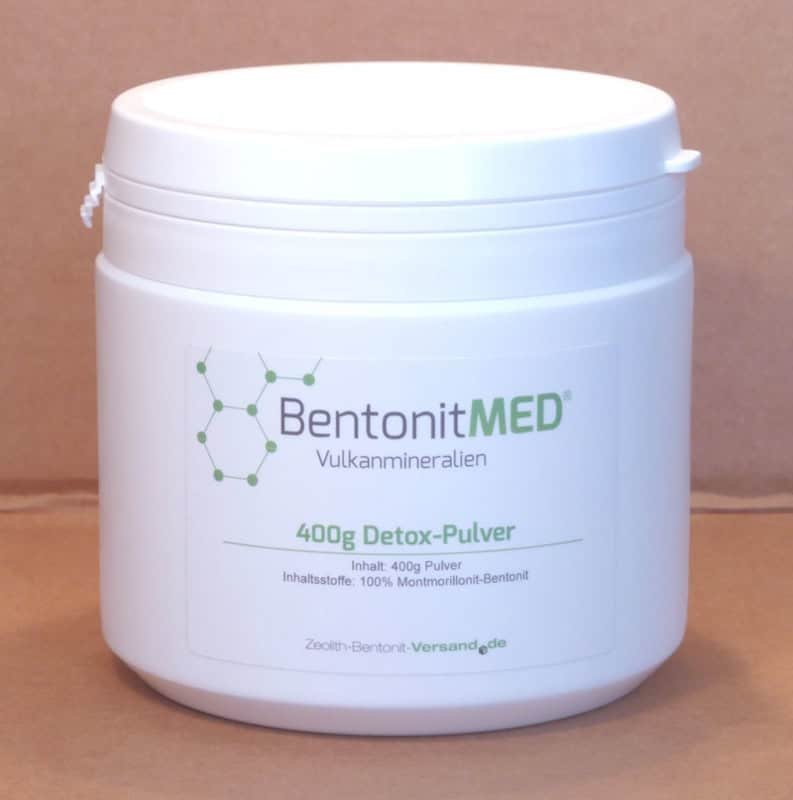
Bentonite Clay
Bentonite clay is widely known for its absorptive properties and is commonly used in mud masks, bath preparations, and topical skin applications. It is described as supporting the removal of impurities, heavy metals, and other unwanted substances from the body.
Traditionally, it has been used externally for skin conditions such as eczema, dermatitis, and psoriasis. Internally, it has been referenced in relation to digestive disturbances, poisoning, and dysentery.
Bentonite clay contains naturally occurring minerals including calcium, iron, potassium, sodium, magnesium, and silica. Some preparations are marketed as dietary supplements. It has also been promoted as part of parasite cleansing protocols.
Origin and Classification
The term bentonite refers to natural clay materials composed predominantly of minerals from the smectite group. These deposits originate from weathered volcanic ash.
The name was introduced in 1898 by Wilbur C. Knight, referencing the Benton Shale formation in the United States. Bentonite is also often referred to as montmorillonite clay, after a significant European deposit.
Bentonite varieties are classified according to their dominant mineral content:
Calcium bentonite
Sodium bentonite
Potassium bentonite
For internal use, calcium bentonite is generally preferred. Sodium bentonite has stronger swelling properties and is more commonly used in industrial applications, such as pond sealing. Sodium bentonite is noted to expand significantly when hydrated and may contribute to constipation if taken internally.
Calcium bentonite typically has a yellow or greenish tone, whereas sodium bentonite is more grey or cream in colour.
Historical Use of Clay
Evidence suggests that clay consumption (geophagy) has occurred across cultures and historical periods. Archaeological findings at Kalambo Falls indicate early hominin interaction with mineral-rich clay deposits. Historical writings, including those attributed to Aristotle, describe clay consumption in Europe for therapeutic and ritual purposes.
Various indigenous cultures in the Andes, Central Africa, and Australia have traditionally consumed small amounts of clay, sometimes dissolved in water, particularly with meals.
Proposed Mechanism of Action
When hydrated, bentonite clay develops a negative ionic charge. It is proposed that this negative charge attracts positively charged substances, including certain metals, bacteria, and other compounds.
The clay’s porous structure allows it to bind substances to its surface. Once bound, these materials are eliminated through the digestive tract. During this process, it is suggested that the clay may release some of its mineral content.
Bentonite is also described as having an alkalising effect and supporting microbial balance within the gut. Some laboratory studies have examined the ability of certain clays to bind bacteria, including strains such as MRSA, Salmonella, and E. coli.
Claims are also made that bentonite may bind heavy metals such as mercury, cadmium, and lead, which are sometimes discussed in the context of parasite protocols.
Use in Parasite Cleansing
In parasite cleanse programmes, bentonite clay is sometimes combined with psyllium husk to reduce the likelihood of constipation and support bowel movement.
General recommendations described include:
Mixing powdered calcium bentonite with filtered water to create a gel
Avoiding metal utensils or containers
Taking one tablespoon on an empty stomach
Drinking adequate water throughout the day
Avoiding medication within two hours of ingestion
Duration is typically described as several weeks.
Clay Comparisons
Natural clays vary significantly in structure, mineral composition, and swelling capacity. Some are suitable for internal use, others are used externally or industrially.
Bentonite & Montmorillonite
Bentonite is abundant and refers broadly to swelling clays derived from volcanic ash. Many bentonites contain montmorillonite, illite, or kaolin components.
Calcium bentonite: Commonly used internally.
Sodium bentonite: Highly swelling; more often used industrially.
Potassium bentonite (potash bentonite): Higher illite content; used in brick production and waste containment.
Montmorillonite refers to very fine calcium bentonite particles (often around one micron or smaller).
Illite Clay
Illite belongs to the clay-mica group and is rich in potassium. It does not swell significantly when hydrated. French Green Clay is an example of an illite clay.
Zeolite
Zeolite differs structurally from true clays. It belongs to the quartz (tektosilicate) family and forms when volcanic material interacts with water.
Its honeycomb-like porous structure allows it to act as a sieve for small particles. Zeolite products are available in liquid and powdered forms. Liquid forms undergo heating and purification processes before use.
Zeolite is primarily described as adsorptive (binding substances to its surface) rather than absorptive. Because it does not easily break down in the body, it is considered less nutritive in terms of mineral contribution.
Sacred Clay
Sacred Clay is described as a naturally occurring blend of several clay types, including rectorite, montmorillonite, illite, pyrophyllite, chlorite, jarosite, and goethite. It is said to contain representatives of major clay classifications.
It is promoted as having a very small particle size and strong detoxifying capacity. Unlike some processed clays, it is described as not requiring heat purification before use.
Sacred Clay is also used agriculturally for soil remineralisation and environmental remediation.
Sacred Clay Compared to Zeolite
Sacred Clay is described as both adsorptive and absorptive, whereas zeolite is primarily adsorptive. Zeolite’s pore structure limits binding to molecules small enough to enter its channels.
Sacred Clay is promoted as having a broader mineral spectrum and breaking down more readily in water, potentially allowing it to provide mineral components to the body.
Zeolite typically requires heating during preparation, which may alter its original structure.
Bentonite and other natural clays have a long history of traditional use, both internally and externally. They differ in mineral composition, particle size, swelling capacity, and structure.
Bentonite clay is primarily described as a negatively charged, absorptive material capable of binding certain substances in the digestive tract. Variations such as calcium and sodium bentonite differ in swelling properties and suitability for internal use.