
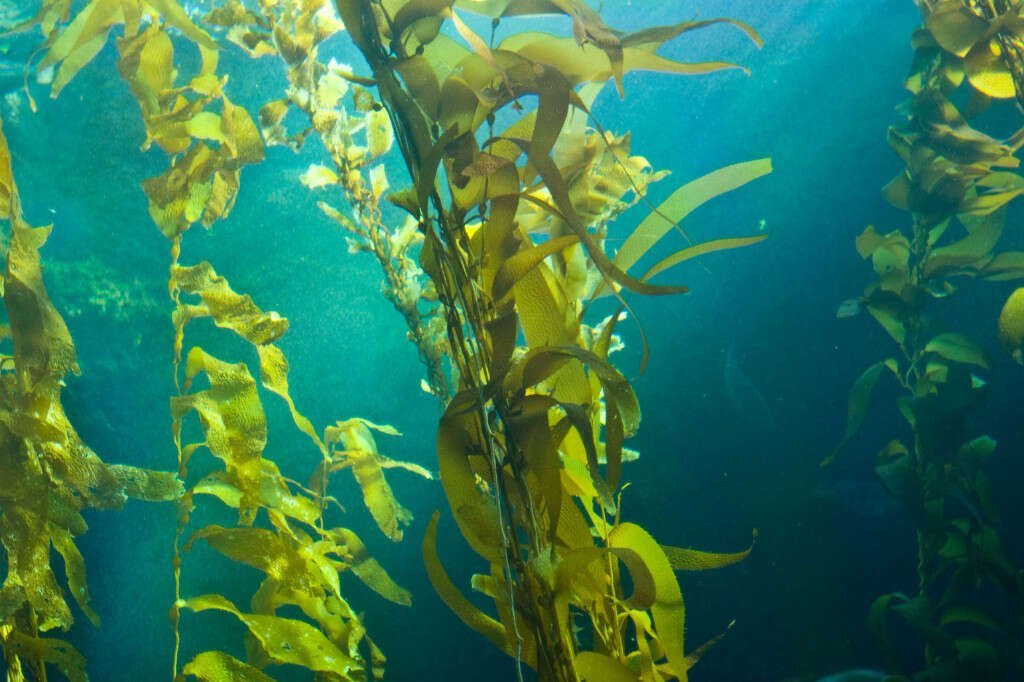
In an age of exhaustion, depletion and dietary noise, kelp sits quietly in a corner, old, unfashionable, and profoundly effective.
This large brown sea vegetable has been part of human diets for centuries, long before supplements came in neon packaging and health advice changed every six months. Its value lies not in novelty, but in density: kelp is one of the most complete natural mineral sources still available to modern humans.
And modern humans, almost without exception, are mineral-depleted.
Industrial agriculture, stripped soils, ultra-processed food, chronic stress and weakened digestion have hollowed out the nutritional foundations of the body. Kelp answers that deficit not with isolated compounds, but as a whole food; minerals embedded in a biological matrix the body recognises.
Its most famous contribution is iodine. Not because iodine is trendy, but because it is systematically displaced. Bromine, chlorine and fluorine; ubiquitous in bread, water and consumer products; interfere with iodine uptake, quietly undermining thyroid function and broader metabolic health. Kelp restores iodine in a form the body can actually use, without forcing it in pharmacological doses.
But iodine is only part of the picture.
Kelp delivers a wide spectrum of trace and ultra-trace minerals; the kind that never make it into standard supplements; alongside calcium, magnesium, soluble fibre, modest protein, phytonutrients and small amounts of essential fatty acids. It is nourishment, not intervention.
This distinction matters.
Single-nutrient supplements tend to behave like blunt instruments. They overwhelm absorption pathways, compete with other minerals and, over time, create new imbalances while attempting to fix old ones. Kelp, by contrast, allows the body to select what it needs and leave the rest behind.
There is also a reason kelp tends to provoke reactions in some people — especially at the start. Not because it is aggressive, but because it is active. By displacing iodine antagonists and binding certain toxic metals, kelp can trigger temporary detoxification responses. These are not signs of harm, but of movement in systems long stuck.
This same binding capacity is why kelp stands apart from other sea vegetables. All marine foods carry the burden of ocean pollution, but kelp contains higher levels of alginates; natural compounds that bind mercury and reduce its absorption. In practice, this makes kelp a safer long-term option than most other sea plants, which are better consumed sparingly, if at all.
There are, of course, limits. Kelp is not appropriate for those with hyperthyroidism or Graves’ disease, at least not until the condition is resolved. Power demands respect. Kelp is a concentrated food, not a garnish.
What makes kelp particularly relevant today is its yang quality; a concept unfashionable in modern nutrition, yet intuitively sound. Kelp is mineral-dense, salty, sun-exposed and contracting in nature. It counters the excessively yin character of modern diets: cold, expanded, watery, over-stimulating and nutritionally thin.
In a culture running on empty, kelp does not stimulate.
It rebuilds. Simple and unglamorous letting biology do what it was designed to do.