
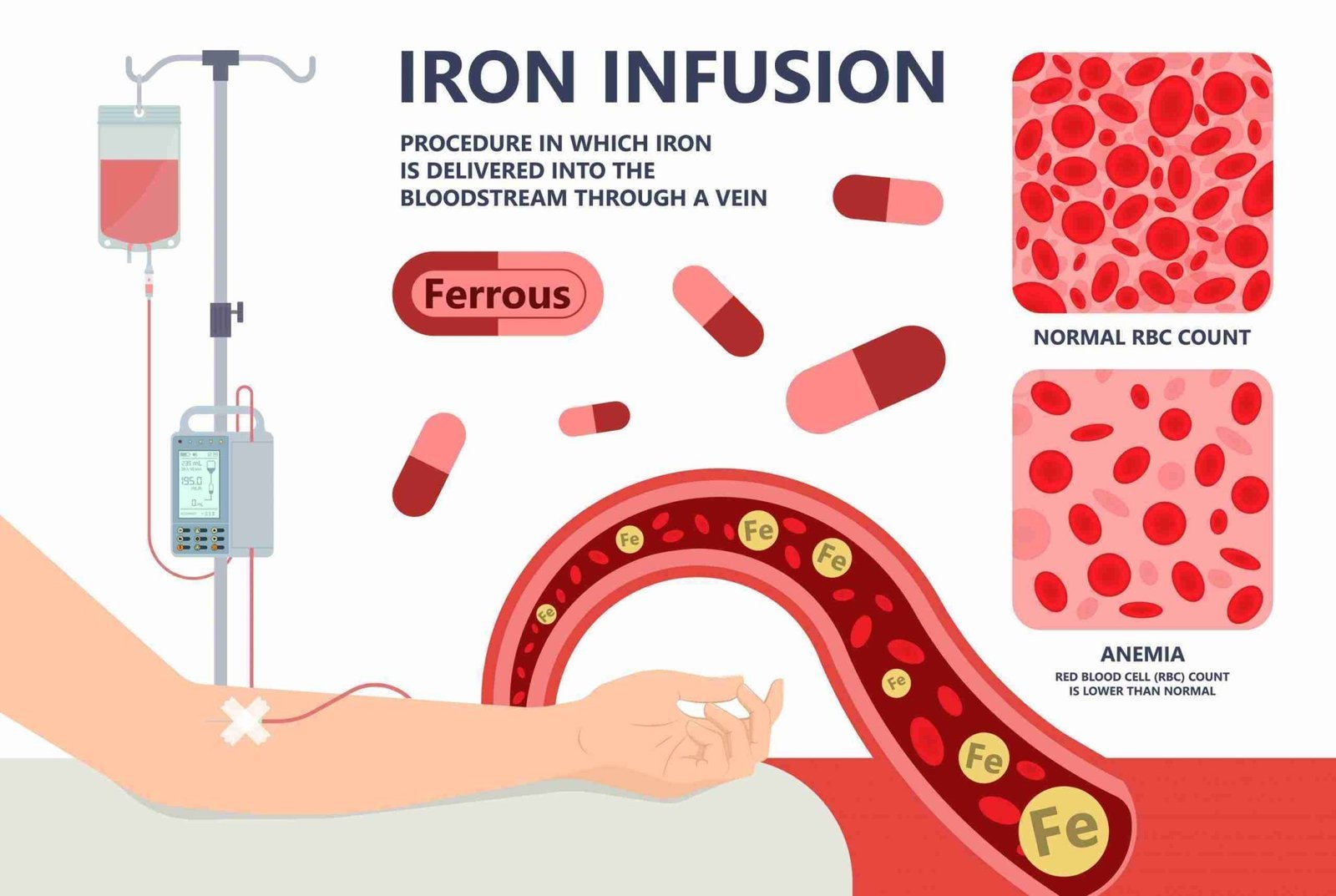
Iron is essential. Without it, haemoglobin cannot carry oxygen and life grinds to a halt. But iron is also a volatile substance, so reactive and potentially destructive that the body treats it like hazardous material. It is bound, escorted, locked away. Nature did not design iron to roam free.
Iron is marketed as salvation in tablet form, or even as an infusion. Tired? Pale? Foggy? Take iron. Push through. Carry on. It is one of the crudest reflexes in modern medicine; and one of the laziest. Free iron is biochemical violence.
Once unrestrained, iron drives reactions that generate the most aggressive free radicals known to biology. These radicals tear at DNA, cripple mitochondria, and sabotage the very systems responsible for energy production. When mitochondria suffer, fatigue becomes structural. No amount of willpower fixes damaged energy machinery. Fatigue does not automatically mean iron deficiency.
The body has almost no effective way of removing excess iron. Apart from menstruation, losses are minimal and fixed. Intake, meanwhile, has been aggressively increased through fortified foods, iron-heavy diets, and high-dose supplements engineered for maximal absorption. What cannot be excreted accumulates.
And iron does not accumulate evenly. It is drawn to damaged tissue; inflamed joints, stressed organs, compromised arteries, degenerating neurons. Iron doesn’t merely accompany degeneration; it intensifies it.
Now enter the exhausted modern human. Chronic stress, poor sleep, relentless pressure and psychological strain push the body into survival mode. In that state:
- inflammation rises
- digestion and absorption suffer
- iron regulation breaks down
- red blood cell production falters
This often results in functional anaemia; symptoms of low oxygen delivery without a simple iron shortage. The body deliberately locks iron away as a protective response to stress and inflammation. Pouring more iron into that system is not helping. This is why so many people with exhaustion “struggle with anaemia” yet feel no better, or worse, on iron supplements.
Modern nutrition policy has only worsened the problem. Food fortification, introduced to address iron deficiency in a minority, imposed chronic exposure on the entire population. No differentiation. No individual assessment. A biological sledgehammer applied to a nuanced system.
Fatigue, burnout and anaemia are rarely isolated problems. They are signals of a system under strain. Stress, inflammation, nutrient imbalance, hormonal disruption and damaged energy metabolism all intersect here. To reduce that complexity to “take more iron” is not medicine.
In a society built on exhaustion, it is no surprise that blood, the very medium of life, begins to fail quietly. Not because we lack iron, but because we refuse to listen to what tired bodies are actually telling us.
Further reading: Robert Jay Rowen, MD
Iron: The Most Toxic Metal, Premium Rowen Report.