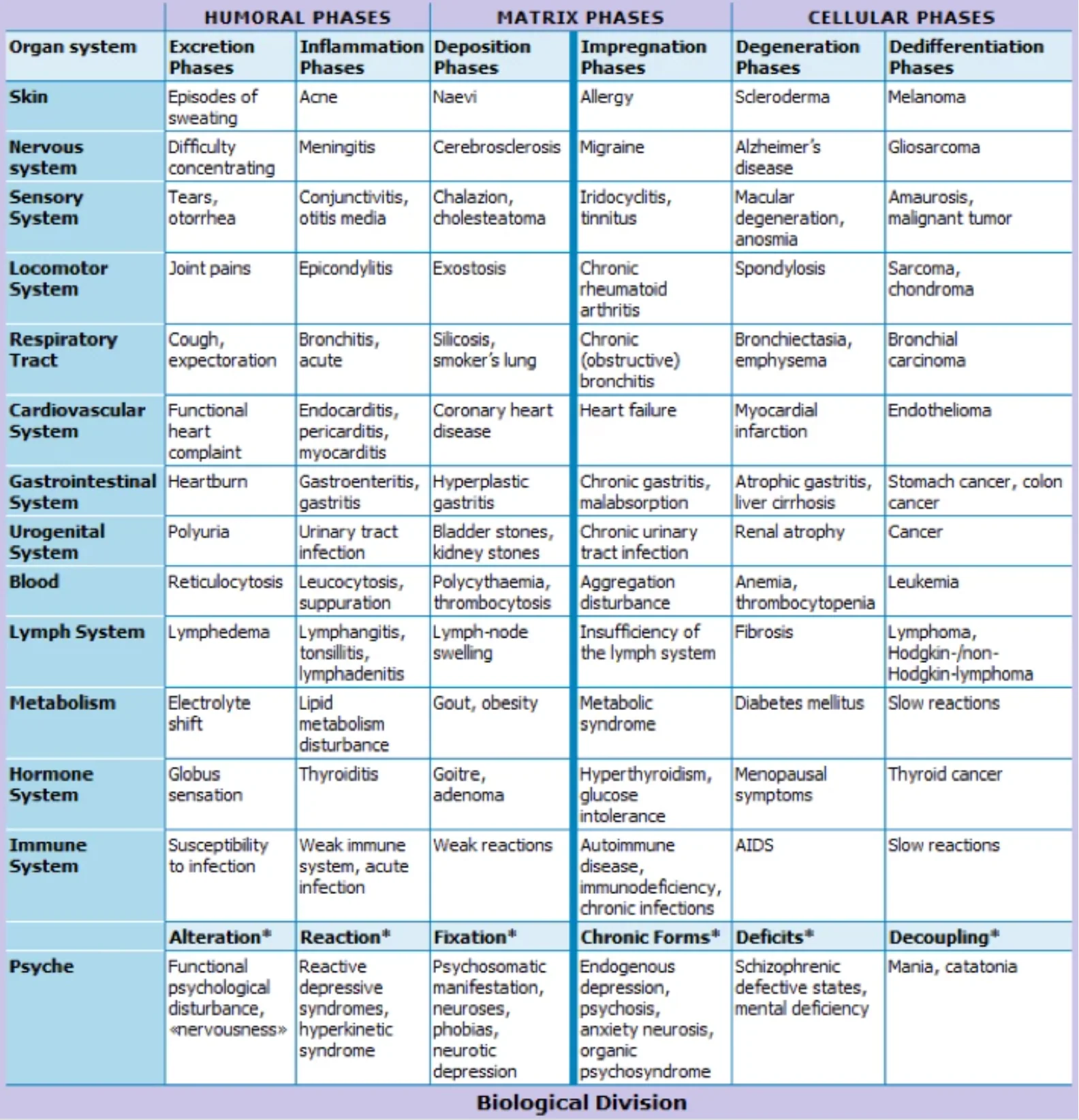

The Six Phases of Homotoxicosis describe how the body reacts to toxins and stress over time. It’s a holistic model showing that illness is not just a symptom, but a dynamic process of self-protection and attempted healing.
- Excretion Phase
- The body actively eliminates toxins via skin, kidneys, lungs, liver, gut, and lymph.
- Symptoms: mild discomfort, rashes, runny nose, mild digestive upset.
- Sign: body is actively detoxing; mostly reversible with support.
- Regeneration Phase
- Damaged tissues are being repaired.
- Symptoms: fatigue, mild inflammation, fever, muscle or joint soreness.
- Body uses energy to restore itself.
- Infiltration Phase
- Toxins accumulate in tissues; subtle organ disruption begins.
- Symptoms: chronic tiredness, low-grade inflammation, digestive imbalance.
- Early chronic stress starts to impact overall health.
- Deposition Phase
- Toxins stored in connective tissue, liver, fat, or organs.
- Symptoms: ongoing chronic complaints, hormonal imbalance, auto-immune responses.
- Body’s detox systems begin to struggle.
- Degeneration Phase
- Long-term toxin burden damages organs and tissues.
- Symptoms: severe chronic illness, persistent inflammation, organ dysfunction.
- Recovery requires intensive support; supplements alone are not enough.
- Necrosis / End Phase
- Irreversible damage to organs and tissues.
- Symptoms: serious disease, organ failure, risk of cancer.
- Focus is on palliative or supportive care.
Holistic Note:
This model shows how illness is often a process rather than a sudden event. Early phases can benefit from nutrition, detox support, energy therapies, and emotional processing. Later phases require more intensive, targeted interventions. Chronic stress or unresolved trauma can lock the body into a phase, preventing natural healing.